The Chicago Storytelling Photographer Guide: A Cinematic Approach
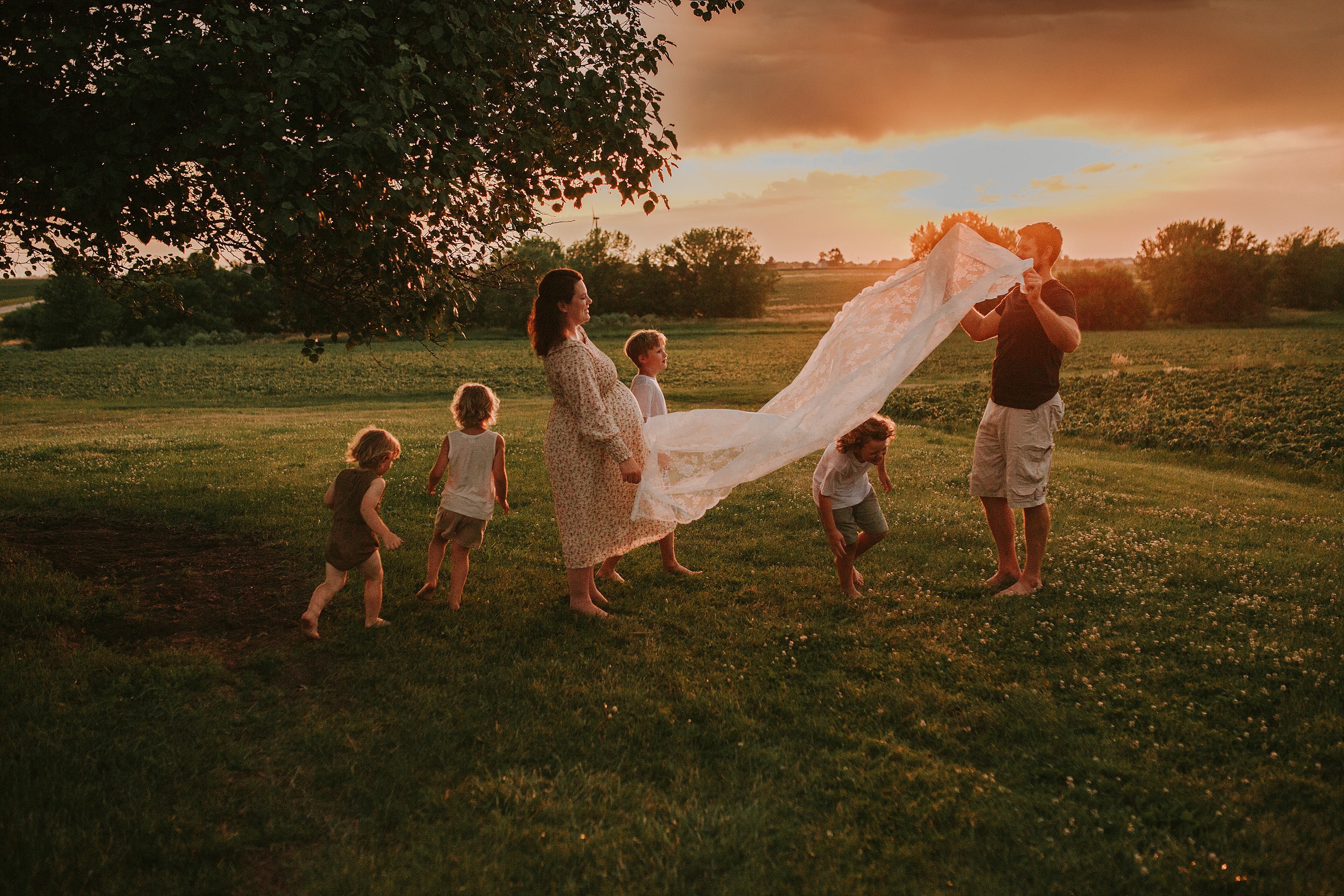
Storytelling photography is more than just a style; it is a philosophy of preservation. Recently, I had the honor of visiting the Lunde family in the Chicago suburbs to document their transition into life with five children. Initially, many families worry that “real life” is too messy for the camera. However, as a Chicago storytelling photographer dedicated to this craft, I believe the chaos is exactly where the art lives. In a city known for its architectural grit and soulful neighborhoods, capturing the “real” is what sets a design-led brand apart..

The Storyboard Philosophy of a Chicago Storytelling Photographer
Interestingly, my approach to photography didn’t start with technical manuals; it started with the way I saw the world as a young photographer. Even then, I found myself structuring my sessions with the final blog post already living in my mind. Specifically, I envision a session as a literal comic book strip or a series of cinematic scenes.
That is simply how it has always worked in my mind. I pick locations that lend themselves to the way a family moves. Because of this mental framework, I don’t just look for a “pretty background.” Instead, I hunt for locations—like the industrial lines of the West Loop or a sprawling North Aurora farm—that act as a stage for natural choreography. Consequently, my sessions feel less like a photoshoot and more like a documentary film set.

Why a Chicago Storytelling Photographer Focuses on Documentary Style
When you are welcoming baby number five, life is in constant motion. In addition, a storytelling approach allows a mother like Kayla to simply be with her children. While traditional portraits can feel stiff, documentary sessions allow for a depth of character that a studio cannot provide.
Furthermore, Chicago families often have deep roots in specific neighborhoods. Whether it’s a brownstone in Wicker Park or a sprawling farm in North Aurora, the environment dictates the mood. As a result, the location becomes a silent narrator of your family’s journey. In my mind, the photos are frames in a strip that tell the story of your home.

How to Structure a Storytelling Session
To illustrate my process, I view a session through three distinct “acts,” much like a film:
The Close-Up (The Detail): Finally, I focus on the small things—a baby’s hand, a textured blanket, or the way a parent’s eyes look when they are tired but happy.
The Establishing Shot: We start with the environment. I capture the family interacting with the space—the scale of the house, the light in the yard, and the general “vibe” of the morning.
The Interaction (The Comic Strip): This is where the movement happens. I encourage activities like cooking, walking, or playing. Specifically, I am looking for the transitions—the moments between the big actions where the real emotion hides.

The Design Brand Aesthetic: Curating Your Home Archive
Indeed, a storytelling session is enhanced by the environment, but it does not require a showroom-perfect house. Instead, it requires intentionality. To elevate the aesthetic of your documentary photos, I look for the “design soul” of your home—the way light hit a well-worn velvet chair or the scattered grain of a wooden dining table where your family actually eats. Ultimately, when your environment reflects your lived-in taste, the photography feels like a high-end design brand feature rather than a staged set.

Textures as Visual Legacy
Similarly, think about the “textures” of your daily life. Because I focus on the tactile details—the weight of a hand-knit blanket or the patina on a vintage dresser—those design choices become vital characters in your visual legacy. Specifically, I am searching for the elements that tell the story of who you are in this moment. Thus, the “design” isn’t about buying new things; it is about appreciating the curated layers of your home as the backdrop for your future heirlooms.

Drawing Inspiration from Chicago’s Visual History
In addition to my own “comic strip” model, I look to the city’s history for inspiration. Specifically, I am moved by how light interacts with our architectural landscape. I highly recommend visiting the Art Institute of Chicago Photography Collection. You can see how masters have captured the “Chicago story” for a century. Indeed, studying these works helps refine the eye for cinematic moments.

Styling Your Family for the Narrative
Often, I am asked what families should wear. Instead of matching outfits, I suggest a “Design-Forward” approach. For example, choose colors that complement your home’s interior.
Movement is Key: Wear clothes you can live in. If you can’t dance or chase a toddler, don’t wear it.
Avoid Logos: They distract from the emotional connection.
Embrace Texture: Think knits and linens. Specifically, textures photograph beautifully in Chicago morning light.

A Connection That Spans Generations
The youngest son in this session, B, often takes a moment to warm up. However, he and I were the best of friends by the end. Similarly, I think he remembers our history together. I was present for his own birth. It is a profound privilege for a Chicago storytelling photographer to see birth clients growing up. Specifically, it was the perfect way to spend a golden evening at the farm.


The Final Frame: Why We Document
Finally, storytelling photography is about the power of the present. Thus, whether it is a birth or a Tuesday afternoon, these images ensure your strength is never forgotten. In conclusion, by choosing a documentary approach, you choose truth over trends. You are creating a “comic strip” of your life. Your children will read it for decades to come.
Sessions like these, truly require gorgeous prints and albums. here are some of the companies I love as a Chicago Maternity Photographer these companies artifact uprising + social print studio
Leave a Reply